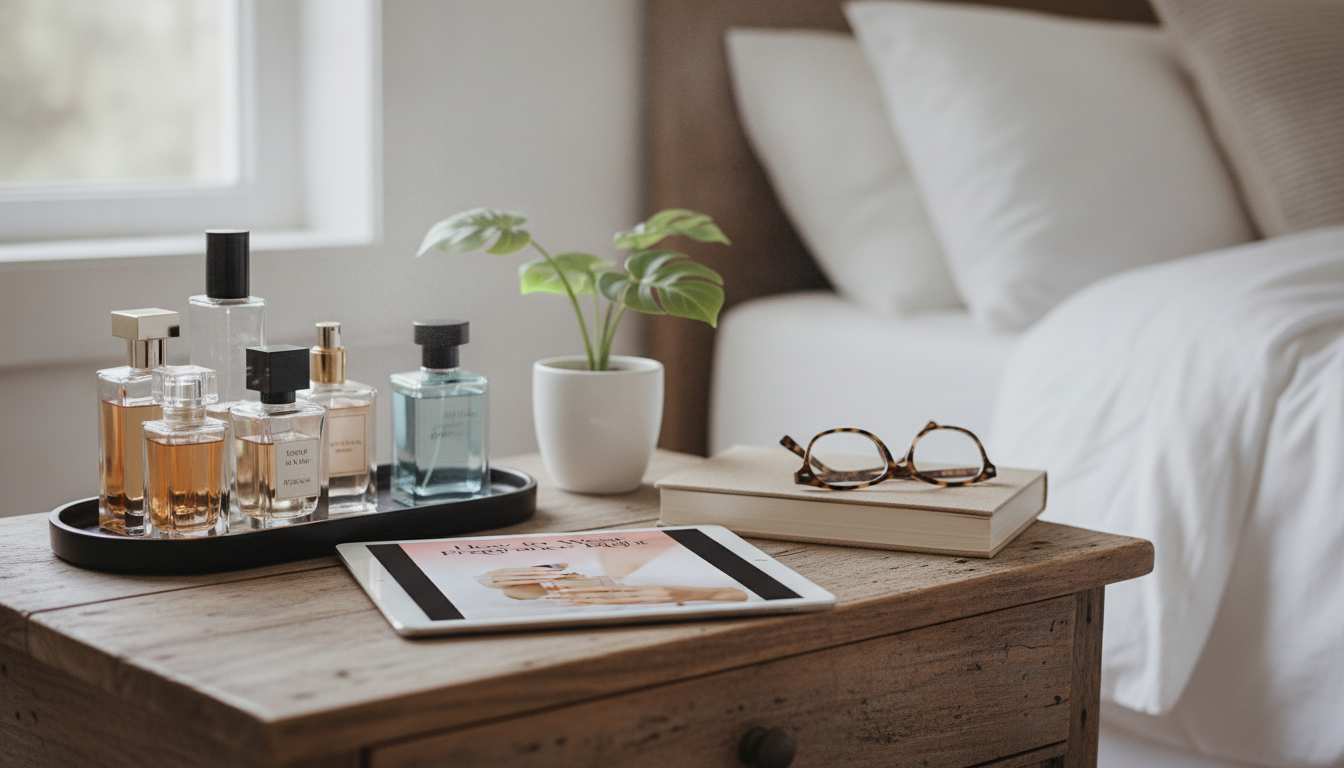
Fragrance should feel intentional: noticeable up close, comfortable in shared spaces, and consistent with the setting. The easiest way to get there is to treat perfume like a small daily routine—choose a projection goal, apply to high-performing areas, and keep notes so you can repeat what works. Below is a practical method for placement, timing, layering, and a simple AI-assisted routine you can refine over time.
Before spraying, decide what you want the scent to do. An intimate effect (date night, office) stays mostly within your personal space. Moderate projection works for errands, daytime socializing, and casual dinners. Strong projection is best saved for outdoor events or nightlife where diffusion is expected.
Environment changes everything. Enclosed spaces—elevators, small offices, airplanes, clinics—usually need fewer sprays than open air. Weather matters too: heat and humidity amplify diffusion, while cold air can mute projection and make you tempted to overspray. Finally, choose the priority for the day: longevity (a steady presence for hours) or freshness (lighter application with an optional mid-day refresh).
If you’re curious how concentration affects strength (for example, Eau de Toilette vs. Eau de Parfum), a helpful reference is this fragrance concentration guide.
Pulse points can help lift scent because they run warmer (wrists, neck, behind ears). But warmth can also intensify sweetness, spice, or heavy woods—so strong fragrances often need fewer sprays on pulse points than on clothing.
Clothing tends to boost longevity and keep projection consistent, but some formulas can stain light fabrics or delicate materials (especially silk). Hair can create a soft scent trail, but if hair is dry, color-treated, or heat-styled often, avoid saturating it—mist a brush or a scarf lightly instead.
One more practical note: hands get washed frequently, so spraying palms or fingers usually leads to quick fading and uneven reapplication.
| Area | Best for | Notes |
|---|---|---|
| Neck / collarbone | Noticeable up close | Use 1–2 sprays; can project strongly in warm weather |
| Wrists / forearms | Personal scent bubble | Do not rub; rubbing can dull top notes |
| Chest (under clothing) | Longevity | Great for subtle wear; warmth helps fragrance bloom |
| Clothing (outer layer) | Long wear, consistent projection | Patch test for staining; keep distance when spraying |
| Hair / scarf | Soft trail | Mist lightly; avoid saturating hair |
A reliable routine starts with a baseline that’s easy to repeat. For a strong formula, start with 1–2 sprays total. For most moderate perfumes, 2–4 sprays is a practical daily range. For very light body mists, 4–6 sprays can be reasonable, especially outdoors.
The key is to add slowly. Spray, then wait 10–15 minutes for the opening to settle. If you need more, add only one spray, ideally to a different area (for example, one on skin and one on clothing). As a self-check, you should catch it at arm’s length, not feel like it “arrives” before you do. If it fills a room, scale back next time.
When you want more impact later, reapplication usually smells cleaner than stacking too much up front—especially for citrus, aromatics, and fresh musks.
Apply fragrance after showering and drying off, when skin is clean and slightly warm. Moisturizing first (with an unscented lotion) can slow evaporation and smooth projection, helping the scent feel more even over several hours.
Avoid spraying onto irritated skin, freshly shaved areas, or broken skin to prevent stinging. Also, protect the scent itself: store bottles away from heat, direct light, and humidity so the composition stays stable over time.
For safety and best practices, consult the IFRA (International Fragrance Association) standards and safety overview, especially if you have sensitivities.
Layering works best when each product has a clear role. Keep the “clean” layer neutral (unscented or lightly scented soap). Let the fragrance be the “character” layer. Then, optionally add “depth” with a matching lotion or a compatible scent family.
Avoid competing scent clouds from heavily scented deodorant, laundry boosters, or strong body washes. If you want to experiment, use bridge notes: vanilla pairs smoothly with amber; citrus blends well with neroli; woods often sit naturally with spices. Change only one variable at a time—same fragrance with a new lotion, or same lotion with a new fragrance—then note how it wears.
Skin helps fragrance bloom and smell more natural, while clothes often improve longevity. A balanced approach is one light spray on skin plus one on clothing (after a quick stain patch test), adjusting down for delicate fabrics.
For many everyday perfumes, 2–4 sprays is a solid baseline, with fewer for strong formulas and more for very light mists. Apply, wait 10–15 minutes, then adjust next wear instead of stacking more immediately.
AI can turn your context (office rules, climate, schedule, favorite notes) into a simple plan with spray count and placement. It can also suggest layering using shared notes, then help you refine the routine using a quick wear log.









Leave a comment