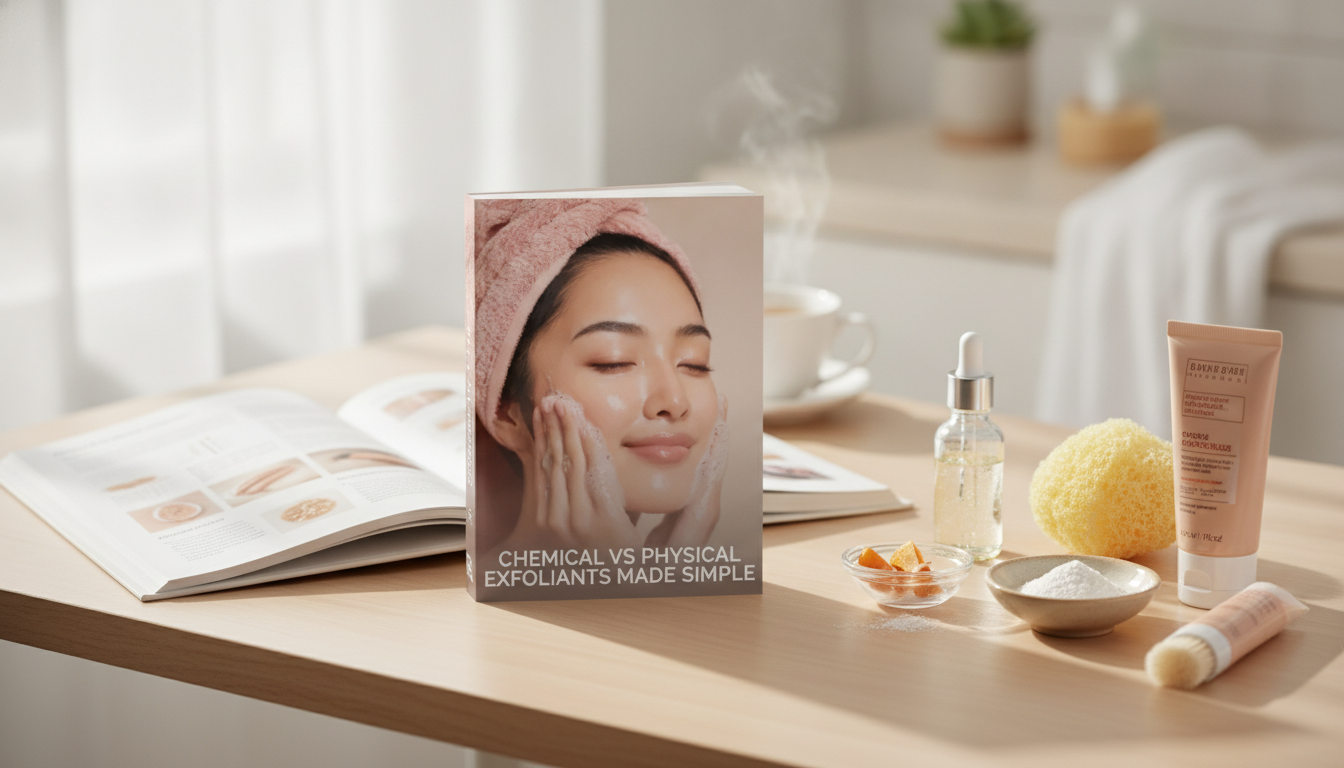
Exfoliation can brighten dull skin, smooth rough texture, and help products absorb better—but choosing the wrong type or using it too often can lead to irritation. This guide explains chemical and physical exfoliants in plain terms, then shows when each makes sense based on skin type, goals, and sensitivity.
At its best, exfoliation helps your skin shed built-up dead cells more evenly. The result is usually a smoother feel, a more refreshed look, and fewer “rough” areas that make makeup or sunscreen catch.
For dermatologist-aligned basics on safe exfoliation, the American Academy of Dermatology Association has practical guidance on how to avoid overdoing it.
Chemical exfoliants use acids or enzymes to loosen the “glue” holding dead cells on the surface, so they shed in a more uniform way. They’re often a better match for concerns that don’t buff away easily—like stubborn congestion, blackheads, and persistent rough texture.
If you’re curious about how stronger in-office exfoliation works (and why gradual use matters), the Cleveland Clinic overview on chemical peels is a helpful reference point.
Physical exfoliants rely on friction: scrubs, textured pads, cleansing brushes, washcloths, or exfoliating gloves. They can be satisfying because the effect is immediate—especially when you’re dealing with visible surface flakes.
Think of chemical exfoliation as a longer-game texture and pore strategy, and physical exfoliation as an occasional “surface polish” when skin is otherwise calm.
| Concern or Situation | Chemical Exfoliant | Physical Exfoliant |
|---|---|---|
| Blackheads and clogged pores | Often best choice (especially BHA) | May worsen congestion if too abrasive |
| Dry flakes / makeup catching | Helpful if skin tolerates (AHA/PHA) but can sting on compromised areas | Gentle washcloth or very mild scrub can help immediately |
| Sensitive or easily red skin | PHA or enzymes; low frequency | Only very soft pressure; avoid harsh granules |
| Uneven tone and dullness | Strong long-term option (AHA) | Short-term smoothness; less targeted for tone |
| Active breakouts / inflamed acne | Careful use can help (BHA), avoid overdoing | Avoid rubbing inflamed spots |
| Razor bumps / ingrowns (body) | Often helpful (AHA/BHA) with gradual schedule | Light exfoliation can help; avoid aggressive scrubbing |
Sun protection matters even more when you exfoliate. For a simple way to sanity-check your daily protection, see Your “Broad Spectrum” SPF Checklist.
For a quick, keep-it-handy reference that matches exfoliant type to common scenarios, Chemical vs Physical Exfoliants Made Simple (digital guide) lays out easy decision rules and frequency ideas.
If your skin looks tired or reactive, consider the basics beyond exfoliation—sleep and recovery matter, too. How Sleep Shapes Your Skin and Slows Aging breaks down how rest supports a healthier-looking barrier and glow.
For broader everyday skin-care and sun-safety fundamentals, the Mayo Clinic’s skin care basics is a reliable overview.
Yes, but start conservatively: separate them by a few days and keep both strength and pressure low. If you notice stinging, tightness, or redness, drop back to one method until skin is fully comfortable.
Often once weekly or less works best. Choose gentler options (PHA/enzymes or a soft washcloth) and only increase frequency if your skin stays calm for several weeks.
Persistent redness, burning, tightness, shiny-looking irritation, sudden product sensitivity, and sometimes more breakouts can all be signs. Reduce or stop exfoliation and focus on moisturizing and daily sunscreen until your skin feels normal again.












Leave a comment